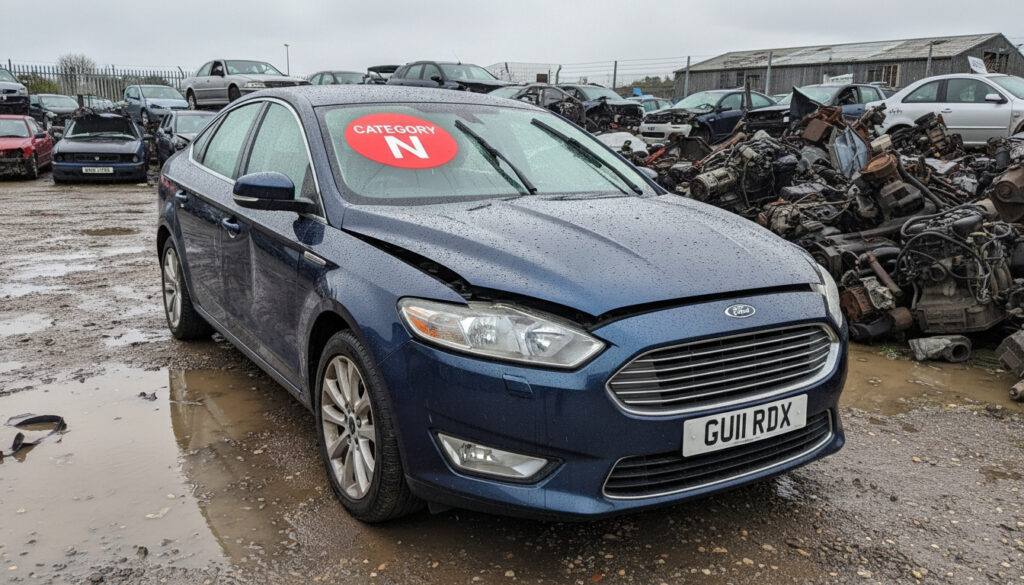
What Does Cat N Mean – UK Write-Off Guide
Category N designates vehicles that have sustained non-structural damage deemed uneconomical to repair by insurance assessors. The classification indicates that while the vehicle’s core safety structure, frame, and chassis remain intact, the cost of remedying other damage exceeds the car’s market value.
Introduced in October 2017 to replace the previous Category D designation, Cat N provides clearer distinction between cosmetic or mechanical damage and structural compromise. This distinction carries significant implications for roadworthiness, insurance premiums, and resale potential within the UK automotive market.
What Does Cat N Mean?
- Non-structural only: The ‘N’ specifically denotes that damage has not affected the vehicle’s structural integrity, frame, or chassis.
- Safety systems included: Despite the non-structural label, damage may encompass safety-critical components such as brakes, steering systems, and suspension elements.
- Permanent record: Once assigned, the Cat N classification remains attached to the vehicle’s history indefinitely and cannot be removed.
- Road legal possible: Vehicles can return to public roads following satisfactory repairs and proper notification to authorities.
- Insurance implications: Premiums typically exceed those for equivalent non-written-off vehicles due to perceived risk.
- Economic total loss: Insurers declare Cat N status when repair costs surpass the vehicle’s pre-accident value, not necessarily due to severity.
- Wide damage range: Classification covers everything from cosmetic panel damage and electrical faults to water damage and interior destruction.
| Aspect | Category N | Category S |
|---|---|---|
| Damage Type | Non-structural | Structural |
| Frame/Chassis Condition | Undamaged and intact | Damaged but repairable |
| Severity Level | Less severe | More severe |
| Repair Complexity | Generally straightforward | Requires specialist expertise |
| Insurance Premium Impact | Higher than standard | Significantly higher |
| Professional Inspection | Recommended | Mandatory |
| Legal Road Status | Permitted after repairs | Permitted after repairs |
| Value Retention | 20-40% reduction typical | 40-60%+ reduction typical |
Cat N vs Cat S: What’s the Difference?
The fundamental distinction lies in the vehicle’s skeleton. Category S vehicles have suffered damage to load-bearing structural elements, requiring specialist realignment and welding. Category N vehicles avoid this classification because their monocoque or chassis remains factory specification, with damage limited to bolt-on panels, mechanical components, or interior elements.
Structural Integrity Indicators
Inspectors assess crumple zones, suspension mounting points, and chassis rails when determining categories. Cat N vehicles retain original structural dimensions, whereas Cat S vehicles show measurable deformation in these critical safety areas. This distinction matters for future crash protection, as repaired structural elements may not perform identically to factory specifications.
Non-structural classification does not exclude damage to brakes, steering racks, or airbag systems. These safety-critical components fall outside the structural definition yet require expert assessment before returning the vehicle to road use.
Insurance and Market Perception
Both categories face higher insurance premiums compared to non-written-off vehicles, though Cat S typically attracts greater surcharges due to the complexity of structural repairs. Resale markets similarly differentiate, with Cat N vehicles generally retaining higher percentages of their original value than their structurally compromised counterparts.
Can You Insure and Finance a Cat N Car?
Insuring a Category N vehicle remains possible but requires additional documentation and attracts elevated premiums. Most mainstream insurers charge rates reflecting the increased risk profile and inspection requirements associated with previously written-off cars. Specialist brokers may offer more competitive terms for professionally repaired examples.
Regulatory Compliance Requirements
Legal road use mandates specific administrative steps. The Driver and Vehicle Licensing Agency (DVLA) must receive notification that the vehicle has been written off. The V5C registration certificate receives an ‘S’ annotation indicating salvage history. Official documentation confirming the vehicle’s safety and legal compliance must precede insurance coverage.
DVLA notification is compulsory, and the V5C logbook will display an ‘S’ marker permanently. Insurers require safety verification certificates before offering comprehensive coverage.
Financing Challenges
Securing finance for Cat N vehicles presents additional obstacles. Many lenders hesitate to provide secured loans against written-off assets due to valuation uncertainties. Specialist lenders may accommodate such purchases, though typically at higher interest rates reflecting the collateral risk. Cash purchases remain the most straightforward acquisition method.
Is a Cat N Car Safe to Buy?
Safety depends entirely upon repair quality rather than classification alone. A properly repaired Cat N vehicle with verified safety systems presents comparable risk to standard used cars. Conversely, inadequate repairs to electrical systems or safety components create significant hazards despite the intact chassis.
Verification Protocols
Professional inspection by an Institute of the Motor Industry (IMI) accredited technician should precede any purchase. Inspection must extend beyond cosmetic appearance to encompass brake function, steering geometry, airbag system integrity, and electrical system reliability. History checks through HPI or equivalent services should confirm the classification and identify any undisclosed issues.
Commission inspections focusing on safety-critical systems rather than cosmetic appearance. Verify that repairs addressed electrical faults, brake components, and steering mechanisms specifically.
Financial Considerations
Category N vehicles typically trade at 20-40% below equivalent non-written-off examples. This discount must balance against higher insurance costs, potential financing difficulties, and permanent residual value reduction. Buyers should calculate total cost of ownership including inflated premiums over their projected ownership period.
When Was Cat N Introduced?
- : The new classification system replaces Categories C and D with Categories S and N, clarifying structural versus non-structural distinctions.
- : Category N specifically replaces Category D, eliminating confusion regarding the severity of damage in the previous system.
- : The reform acknowledges increased complexity in modern vehicle repair, where cosmetic damage can involve expensive sensors and electronics.
- : Vehicles assessed before the reform retain their original Cat D classifications and are not automatically reassessed under the new framework.
What Is Definite About Cat N Classifications?
Established Information
- Damage is strictly non-structural; frame and chassis remain intact
- Vehicles can be repaired and returned to legal road use
- Classification remains permanently on the vehicle’s record
- Sellers must legally declare write-off status to buyers
- Insurance premiums exceed standard vehicle rates
Information Requiring Verification
- Quality and completeness of previous repairs
- Long-term mechanical reliability post-repair
- Exact market value reduction for specific models
- Availability of comprehensive insurance policies
- Presence of hidden damage not initially assessed
Why Does the Category N System Exist?
The classification system serves economic clarity within insurance markets. When repair costs—including parts, labour, and courtesy car provisions—exceed a vehicle’s market value, insurers categorise the loss as a total write-off. The distinction between structural and non-structural damage helps differentiate between vehicles requiring fundamental safety rebuilding versus those needing component replacement.
Modern vehicles incorporate sophisticated electronics and advanced materials that complicate seemingly minor repairs. A bumper replacement might involve recalibrating radar sensors, parking cameras, and crumple zones, pushing costs beyond the vehicle’s worth despite superficially minor damage. The Cat N classification captures these scenarios where the shell remains sound but economics favour insurance settlement over repair.
Understanding these distinctions helps consumers navigate purchases appropriately. Those seeking What Song Is This technology in modern vehicles should note that Cat N classifications may affect integrated infotainment and sensor systems requiring recalibration.
What Do Industry Experts Say About Cat N Vehicles?
Buyers should not assume Cat N vehicles are automatically drivable; professional assessment is essential since non-structural faults may affect critical safety systems like brakes and steering.
RAC Motoring Advice
All sellers—whether trade or private—are legally required to declare if a vehicle has been previously written off.
Auto Express
Categories A and B vehicles should never appear in used car classifieds, and buyers are strongly advised to avoid them if identified.
Autotrader
Should You Consider Buying a Category N Vehicle?
Category N vehicles suit buyers prepared to conduct thorough due diligence and accept higher ongoing insurance costs in exchange for reduced purchase prices. Success requires verifying professional repairs to safety systems, obtaining comprehensive history checks, and budgeting for elevated premiums. Those unwilling to manage these complexities should avoid the category entirely. For biological context on cellular regeneration and repair mechanisms, consider researching What Name Is Given to Animal Cells With the Capacity to Differentiate Into a Specialised Cell, which offers interesting parallels to vehicle restoration concepts.
Quick Facts About Category N Write-Offs
How much cheaper is a Cat N car?
Category N vehicles typically sell for 20-40% less than equivalent non-written-off models, though exact discounts vary by make, model, and damage severity. This reduction must offset higher insurance costs.
What does the N in Cat N stand for?
The ‘N’ stands for “Non-structural,” indicating that the vehicle’s core frame, chassis, and load-bearing elements remain undamaged and factory specification.
Do Cat N cars need special MOT tests?
No special MOT category exists for Cat N vehicles. They undergo standard annual testing like any other vehicle. However, inspectors may scrutinise repair quality more closely if visible evidence suggests previous damage.
Can a Cat N marker be removed from the record?
No. The classification remains permanently attached to the vehicle’s VIN and appears on history checks indefinitely. Even after repairs, the write-off status persists as part of the vehicle’s documented history.
Will a Cat N car always cost more to insure?
Most insurers charge higher premiums for Cat N vehicles indefinitely, reflecting the history of significant damage. However, specialist brokers may offer competitive rates for vehicles with documented professional repairs and clear history checks. Source: RAC
How can I check if a car is Category N?
Professional history checking services such as HPI reveal Cat N classifications in vehicle history reports. Sellers must legally disclose this status, though independent verification remains essential given potential for dishonest non-disclosure.
What types of damage typically cause Cat N classification?
Common causes include cosmetic bodywork damage, electrical system faults, interior water damage, engine or gearbox issues, and suspension component damage that does not affect structural mounting points.
More related posts
 Emmerdale Spoilers Next Week – Charity Gives Birth In Lift
 iPhone 14 vs 15: Specs, Camera, Battery & Upgrade Guide
 Julie Bowen: Health, Fitness, Divorce & Career Facts
 Tom Rhys Harries: Biography, Age, Movies and TV Shows
 How Many Days Until Christmas? 2026 Countdown Explained
 HMV Comeback UK Stores – Where and When They’re Opening
 British Heart Foundation Near Me – Find Shops, Locations and Hours
 How to Play Chess – Essential Rules and Setup Guide