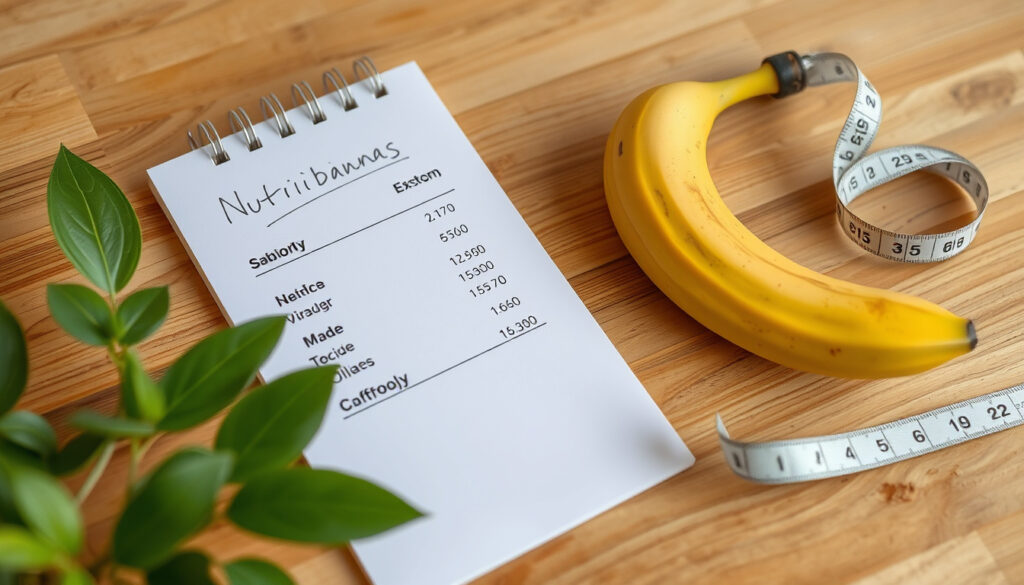
Calories in a Banana: Nutrition Facts and Health Insights
You’ve probably grabbed a banana as a quick snack without giving its calorie count much thought. A medium banana delivers around 105 calories along with 15 grams of natural sugar — numbers that often raise questions about weight loss and blood sugar, so here’s a closer look at the evidence to help you decide where this convenient fruit fits in your diet.
Average calories (medium banana): 105 kcal ·
Carbohydrates: 28 g ·
Natural sugar: 15 g ·
Fiber: 3 g ·
Protein: 1 g ·
Potassium: 422 mg
Quick snapshot
- Medium banana contains about 105 calories (NutriScan App)
- Good source of potassium (422 mg) and vitamin B6 (Harvard T.H. Chan Nutrition Source)
- Bananas have natural sugars and fiber that aid satiety (Noom Blog)
- Whether bananas directly reduce belly fat (Healthline)
- Optimal daily banana intake for weight loss (Noom Blog)
- Impact of long-term banana consumption on diabetes control (Harvard T.H. Chan Nutrition Source)
- Small (6-7 in): ~90 calories (Noom Blog)
- Medium (7-8 in): ~105 calories (NutriScan App)
- Large (8-9 in): ~121 calories (USDA SNAP-Ed)
- Carbohydrates: 28 g (NutriScan App)
- Fiber: 3 g (Harvard T.H. Chan Nutrition Source)
- Protein: 1 g (NASM Blog)
- Potassium: 422 mg (Eat This Much)
The six key figures below show the macronutrient split that drives banana’s reputation as a nutrient-dense snack. Notice that fiber accounts for about 11% of total carbs — a ratio that helps blunt blood sugar spikes.
| Nutrient | Value (medium banana) |
|---|---|
| Average calories | 105 kcal |
| Carbohydrates | 28 g |
| Natural sugar | 15 g |
| Fiber | 3 g |
| Protein | 1 g |
| Potassium | 422 mg |
How many calories are in 1 average banana?
Banana calories depend heavily on size. According to the USDA SNAP-Ed, a medium banana (118 grams) contains 105 calories, 27 grams of carbohydrates, 3 grams of fiber, and 14 grams of sugar. That aligns with data from the Harvard T.H. Chan Nutrition Source (university nutrition research center), which reports 110 calories for a slightly riper fruit.
Calories by banana size
- Extra-small (81g): ~72 calories — Noom Blog (behavioral weight-loss platform)
- Small (101g): ~90 calories — Noom Blog
- Medium (118g): ~105 calories — Harvard T.H. Chan Nutrition Source
- Large (136g): ~121 calories — Noom Blog
The implication: a single banana accounts for only 5–6% of a 2000-calorie diet, making it a relatively low-energy food regardless of size.
You get more volume per calorie than most processed snacks — a medium banana weighs 118g for just 105 calories, whereas a 30g serving of potato chips delivers about 160 calories with far less satiety.
Calories in a banana with peanut butter
Pairing banana with peanut butter is a classic snack, but it roughly doubles the calorie count. One medium banana (105 cal) plus 2 tablespoons of peanut butter (≈190 cal) comes to about 295 calories. Healthline (medically reviewed nutrition site) notes this combo can be a balanced mini-meal with protein and healthy fats, though portion control matters if you’re watching total intake.
Calories in a banana slice
A typical slice from a medium banana weighs about 15 grams and contains roughly 13 calories, per Eat This Much (calorie database). That makes banana a reasonable topping for cereal or oatmeal without blowing your daily budget.
Protein and carbs in a banana
One medium banana provides about 1 gram of protein (NutriScan App) and 27–28 grams of carbohydrates (Harvard T.H. Chan Nutrition Source). The carb load makes it a popular pre-workout fuel: the 27g of carbs replenish glycogen, and 422mg of potassium help prevent muscle cramps.
The pattern: bananas provide quick energy for exercise, making them a smart pre-workout choice.
Is 1 banana a day too much sugar?
A medium banana contains about 15 grams of natural sugar (Harvard T.H. Chan Nutrition Source). That’s roughly the same amount as a small apple, and far less than a 12-ounce soda (∼40g added sugar). Healthline points out that the fiber in bananas slows digestion and blunts blood sugar spikes, making them a better choice than high-sugar processed foods.
Natural sugar versus added sugar
Bananas contain only naturally occurring sugars — fructose, glucose, and sucrose — packaged with fiber and micronutrients. The USDA’s SNAP-Ed program (government nutrition education) lists bananas as a whole fruit that contributes to recommended fruit intake without added sugars.
Daily sugar recommendations
The American Heart Association recommends no more than 25–36 grams of added sugar per day for most adults. Since banana sugar is naturally occurring, it doesn’t count toward that limit — but total carbohydrate intake matters for people with diabetes. The Harvard T.H. Chan Nutrition Source notes that one banana provides about 10% of the daily carbohydrate needs for a 2000-calorie diet.
Bananas in a balanced diet
For most people, one banana per day is well within healthy limits. The fiber (3g per medium banana) increases fullness and helps regulate blood sugar, as reported by Noom Blog (behavioral weight-loss platform). Green bananas offer even more resistant starch, which further stabilizes glucose response. The pattern: one banana a day fits easily into a balanced diet — the risk isn’t the fruit itself but displacing other vegetables and proteins.
Are bananas good for dieting?
With 105 calories and 3g of fiber per medium fruit, bananas are a low-energy-density food that can support weight loss when eaten in moderation. Noom Blog highlights that the fiber promotes satiety, helping you feel full with fewer total calories.
- Low calorie density: 0.89 kcal/g
- 3g fiber per medium banana improves satiety (Harvard T.H. Chan Nutrition Source)
- Portable and naturally packaged — reduces temptation for ultra-processed snacks
NASM Blog (certified fitness trainer resource) advises that bananas can be part of a fat-loss plan, but portion size matters: limit to one per day and pair with protein for better appetite control.
The 3 grams of fiber in a medium banana (about 12% of the daily recommended intake) slow gastric emptying and extend fullness, making bananas more satisfying than many other fruits of similar calorie loads.
An apple provides about 95 calories with 4g fiber, and a cup of strawberries has 55 calories with 3g fiber. Bananas sit in the middle — higher in calories than berries but richer in potassium and vitamin B6. The catch: bananas are more calorie-dense than most berries, so volume control matters more.
The takeaway: bananas are a solid choice for weight loss if eaten as a substitute for high-calorie snacks, not added on top of them.
For someone aiming to lose weight, swapping a 150-calorie bag of chips for a 105-calorie banana saves calories and adds fiber — but eating two bananas plus your usual meals can push you over your deficit.
Why do some doctors say not to eat bananas?
Some health professionals advise caution with bananas for specific medical conditions — not because they’re unhealthy, but because their nutrient profile can be problematic for certain populations.
Potassium and kidney concerns
One medium banana provides 422mg of potassium. For people with chronic kidney disease, excess potassium can be dangerous. The Harvard T.H. Chan Nutrition Source notes that individuals on dialysis or with impaired kidney function should consult their doctor about banana intake.
Sugar and diabetes management
Bananas have a glycemic index (GI) that ranges from 42 to 62 depending on ripeness, placing them in the low-to-medium category. For diabetics, portion size and ripeness matter more than total avoidance. Healthline recommends choosing less-ripe bananas because they have more resistant starch and a lower GI.
Ripeness and blood sugar impact
As bananas ripen, starches convert to sugars. A green banana has a GI of about 30–42, while a fully ripe banana can reach 51–62. The fiber content remains stable, but the sugar load increases, which can affect post-meal glucose levels.
Allergies and sensitivities
Banana allergies are rare but exist, often linked to latex-fruit syndrome. People with known allergies should avoid bananas entirely. Additionally, those on low-carb or ketogenic diets often limit bananas because of the 28g carb count per medium fruit.
The implication: doctors caution bananas in specific circumstances — kidney failure, diabetes with poor control, or severe allergies — but for the general population, they remain a healthy choice.
Which fruit can burn belly fat?
No fruit specifically targets belly fat. Spot reduction is a myth: fat loss occurs from the whole body when you maintain a calorie deficit, as emphasized by Healthline. However, some fruits support overall fat loss better than others.
Spot reduction myth
Ab exercises and “belly-burning foods” don’t selectively remove abdominal fat. Noom Blog explains that a calorie deficit combined with whole foods, including bananas, can reduce overall body fat over time.
Fruits that support overall fat loss
- Berries (low calorie, high fiber)
- Apples (~95 cal, 4g fiber)
- Grapefruit (some studies suggest modest appetite suppression)
- Bananas (provide energy for exercise, which supports calorie burn)
Healthline notes that bananas can be part of a fat-loss diet but are not a magic bullet. The key is overall diet quality and adherence to a calorie deficit.
Role of bananas in a calorie deficit
Bananas offer a convenient, portable snack that can replace higher-calorie options. A medium banana at 105 calories is a smart swap for a 200-calorie granola bar. Pair it with protein (like Greek yogurt or peanut butter) for better satiety. Noom Blog suggests using bananas as a pre-workout fuel to maintain intensity during exercise, which can increase total daily energy expenditure.
The discovery: No fruit spot-reduces belly fat, but bananas help sustain a calorie deficit by providing low-calorie fuel for workouts and curbing cravings for processed sweets.
Upsides of bananas
- Low calorie density (0.89 kcal/g)
- 3g fiber improves satiety
- Rich in potassium and vitamin B6
- Convenient and affordable
- Provides quick energy for exercise
Downsides of bananas
- 28g carbs can be high for low-carb diets
- Moderate glycemic index — ripe bananas spike blood sugar
- Not suitable for people with kidney failure (potassium)
- Can be overeaten — 2+ bananas add 200+ calories
- Less fiber and more sugar than berries per calorie
What we know for sure — and what’s still uncertain
Confirmed facts
- Medium banana: 105 calories, 28g carbs, 3g fiber, 15g sugar (Harvard T.H. Chan Nutrition Source)
- Good source of potassium (422 mg) and vitamin B6 (NutriScan App)
- Bananas contain only natural sugars, no added sugars (USDA SNAP-Ed)
- Fiber slows sugar absorption (Healthline)
What’s unclear or debated
- Whether bananas directly reduce belly fat (Healthline)
- Optimal daily banana intake for weight loss (Noom Blog)
- Long-term effects of regular banana consumption on diabetes control (Harvard T.H. Chan Nutrition Source)
- Ripeness thresholds for ideal blood sugar management in prediabetes
The takeaway: while the evidence supports many benefits, some questions remain unanswered.
Expert perspectives on banana nutrition
One medium ripe banana provides about 110 calories, 0 gram fat, 1 gram protein, 28 grams carbohydrate, 15 grams sugar, 3 grams fiber.
— Harvard T.H. Chan School of Public Health (university nutrition research center)
Bananas generally contain 72–135 calories and 19-35 grams of carbs, depending on their size.
— Healthline (medically reviewed nutrition site)
A small banana of 6-7 inches offers around 90 calories, and a medium banana, 7-8 inches, contains about 105 calories.
— Chiquita (leading banana brand)
For the average person trying to manage their weight or blood sugar, the choice is clear: include bananas in moderation as part of a balanced diet, or miss out on a cheap, nutrient-dense snack that supports exercise recovery and satiety.
Frequently asked questions
How many carbs are in a banana?
A medium banana contains about 28 grams of carbohydrates, including 15 grams of natural sugar and 3 grams of fiber (Harvard T.H. Chan Nutrition Source).
Is banana good for diabetes?
Bananas can be eaten by people with diabetes in moderation. Choose less-ripe bananas for a lower glycemic index (30–42 vs 51–62 for ripe) and pair with protein or fat to slow sugar absorption (Healthline).
Can bananas help with weight loss?
Yes, when eaten as part of a calorie-controlled diet. Their fiber (3g) and low calorie density (105 kcal per medium banana) promote satiety and can replace higher-calorie snacks (Noom Blog).
How many bananas can I eat per day?
For most people, 1–2 bananas per day is fine. Those with kidney disease or diabetes should consult their doctor due to potassium and carb content (Harvard T.H. Chan Nutrition Source).
Are green or ripe bananas healthier?
Both have benefits. Green bananas have more resistant starch (lower GI, better blood sugar control) while ripe bananas are easier to digest and provide more antioxidants (Healthline).
What is the calorie difference between a banana and an apple?
A medium banana has about 105 calories, while a medium apple has about 95 calories. Apples offer slightly more fiber (4g vs 3g) (USDA SNAP-Ed).
Do bananas cause belly fat?
No. No food specifically causes belly fat; excess calories from any source can lead to overall fat gain. Bananas themselves are low in calories and can support weight management (Healthline).
Related reading
- Is Swimming Good for Weight Loss? — Another perspective on calorie expenditure and weight management.
- How to Make Flatbread — A healthy recipe that pairs well with banana for balanced meals.
More related posts
 Full Blood Count Test – Results and Normal Ranges Explained
 Emmerdale Spoilers Next Week – Charity Gives Birth In Lift
 Is COVID Still Around – UK Rates, Risks and Trends 2026
 Gift Sets for Women – Value Picks From £15 to £150
 7 Habits of Highly Effective People – Summary and Guide
 MyAnna Buring: Biography, Career, and Notable Roles
 Estee Lauder Double Wear – Stay-in-Place Foundation Guide
 National Savings and Investments – Premium Bonds Rates 2026