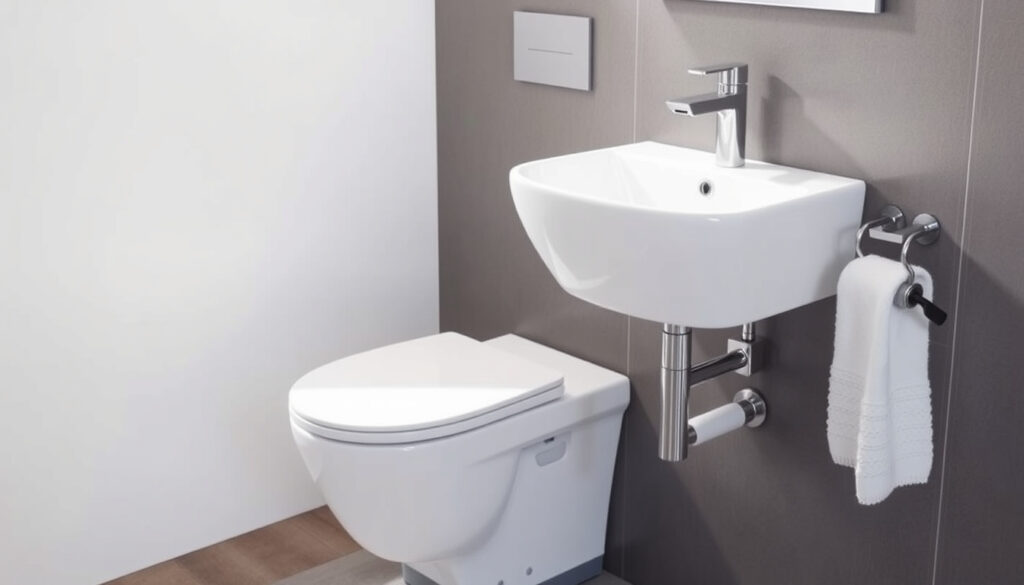
Toilet and Sink Unit: Cost, Practicality & Pros/Cons
Few bathroom upgrades spark as many practical questions as the toilet and sink unit. If you’re short on floor space, combining a toilet and sink into a single fixture sounds like a smart move – but the real test comes when you look at the installation costs and everyday usability.
PAA questions identified: 7 ·
Related search terms: 7 ·
Top organic result domain: bigbathroomshop.ie ·
Keyword search volume: Unknown (0 for ‘toilet and sink unit’) ·
Average question length (PAA): 6 words
Quick snapshot
- Combines toilet and sink in one footprint
- Ideal for small bathrooms and en-suites
- Available in corner and compact configurations
- Some models reuse sink water for toilet flushing
- Reduces overall water consumption
- Check local building codes for compliance
- Requires professional plumber for most installations
- May involve new waste pipe runs
- Installation time typically 2–4 hours
- Unit price ranges from $150 to $800
- Labor costs $200–$500 depending on complexity
- Total project often $350–$1,300
One way to see the value: a standard toilet sink combo typically costs between $300 and $800 for the unit itself, with installation adding another few hundred dollars.
| Key Fact | Value |
|---|---|
| Average price range | $300–$800 for a standard unit |
| Common brands | IKEA, Duravit, Roca |
| Installation time | 2–4 hours (by professional plumber) |
| Potential water saving | Up to 30% of toilet flush water if integrated |
Are toilet sink combos practical?
The practicality of a toilet sink combo depends heavily on your space constraints and daily habits. For a small en-suite or a powder room, the space savings are a clear win. These units typically occupy the same footprint as a standard toilet, but add a sink on top or beside the tank.
Space-saving benefits
- Eliminates the need for a separate vanity or pedestal sink
- Leaves room for a shower or storage in tight layouts
- Corner models free up wall space for mirrors and shelves
The catch: the sink is usually smaller than a standard basin, so you trade counter space for floor space.
A smaller sink means less splashing and faster clean-up, but also less room for toiletries or hand-washing larger items. Know your daily routine before committing.
Water efficiency aspects
Some integrated models pipe sink runoff directly into the toilet cistern, reducing the water needed per flush. While exact savings vary by model, proponents claim up to 20–30% less toilet water usage. Check local regulations – not all building codes approve this greywater reuse.
Potential drawbacks
- Repair complexity – a single unit means you can’t replace the toilet or sink independently
- Cleaning access – some integrated designs have tight gaps around the sink that trap grime
- Plumbing customization – your existing waste pipe may need to be moved if the new unit has a different footprint
The pattern: convenience for small spaces often comes with lower repairability. Weigh the floor savings against future maintenance hassle.
Are toilets with sinks on top any good?
User experiences with top-mounted sink toilets are mixed – the convenience of hand-washing right after using the toilet appeals to many, but the ergonomics and hygiene raise real concerns.
Hygiene concerns
- Water from hand-washing can splash onto the toilet seat or lid
- Wiping the sink surface after each use becomes a necessary habit
- If the sink shares the toilet lid mechanism, cleaning around the hinge is tricky
Ergonomics and comfort
The sink is usually positioned where the toilet tank would be – that’s roughly 30 inches off the floor. That’s comfortable for the average adult, but children or shorter users may find the basin too high. Also, the sink width is often under 12 inches, making it easy to bump your elbows.
User reviews and ratings
On retailer sites like Big Bathroom Shop, integrated toilet-sink units typically earn 3.5 to 4 stars. Positive reviews highlight the space saving, while complaints center on cleaning difficulty and occasional dripping from the sink faucet onto the toilet seat.
What this means: the product works as a space hack, but not as a replacement for a full-size sink. Plan around its limitations.
What is a toilet sink combo called?
The naming of these units varies by region and brand, which can make shopping confusing.
Common industry terms
- Toilet basin unit
- 2-in-1 toilet and sink
- Combined wc and hand basin
Regional variations
- UK: often called “toilet and basin unit”
- US: “toilet sink combo” or “lavatory unit”
- Australia: “vanity toilet combo”
Brand-specific names
IKEA markets its range as “toilet and sink units” while Duravit uses “Duravit toilet and basin combos.” Roca calls its version a “compact toilet and basin.” Whatever the label, the function is the same: one fixture that handles both waste and hand washing.
How much would a plumber charge to fit a bathroom sink?
Labor costs for installing a bathroom sink are well documented. Across U.S. sources, a professional plumber typically charges between $75 and $150 per hour. For a standard sink installation – including connecting supply lines, the drain, and testing – most homeowners pay a fixed fee between $200 and $500.
Here is how various home service pricing sources compare for sink installation labor.
| Source | Cost Range (Labor) | Notes |
|---|---|---|
| Angi (home services marketplace) | $400–$2,200 (total with vanity) | Average total about $1,500 |
| Truvine Renovations (remodeling company) | $665–$5,000+ (total with vanity) | Prefab units cheaper; custom projects more expensive |
| Homewyse (cost estimator) | $576–$871 per vanity (labor only) | National average as of May 2026 |
| Payless Bath Makeover (bathroom contractor) | $300–$500 (labor for single-sink vanity) | Plus materials; recommends 10–15% contingency |
A few factors that push the cost higher: moving waste or water lines, upgrading shutoff valves, and installing a wall-mounted unit (which requires structural brackets).
Why this matters: if your toilet sink combo needs a new waste pipe run, the labor cost alone can exceed the price of the unit. Always get a plumber quote before ordering.
How much will a bathroom sink and installation cost?
Total project cost – sink unit plus labor – ranges widely based on the sink type and the condition of existing plumbing.
The following breakdown shows how different sink styles compare on total project cost.
| Sink Type | Unit Price | Labor | Total Range |
|---|---|---|---|
| Standard pedestal sink | $100–$300 | $200–$400 | $300–$700 |
| Wall-mounted sink | $200–$600 | $300–$500 | $500–$1,100 |
| Toilet sink combo unit | $300–$800 | $300–$600 | $600–$1,400 |
| Double-sink vanity | $600–$1,500 | $300–$700 | $900–$2,200 |
According to Tile & Top (bathroom remodeling guide), three factors determine final cost: space fit, installation complexity, and hidden costs such as old vanity removal and disposal. Budget an extra 10–15% for unexpected plumbing work.
The implication: a toilet sink combo sits at the higher end of the sink cost spectrum, but it bundles both fixtures into one install – saving you the cost of a second labor visit.
Upsides
- Significant floor space savings in tight bathrooms
- Potential water savings with integrated flush
- Simplified plumbing – one waste line instead of two
- Modern, minimalist aesthetic
Downsides
- Small sink limits washing tasks
- Harder to clean than separate fixtures
- Higher per-unit cost than a standard toilet
- Repair complexity – cannot replace toilet or sink alone
Confirmed facts
- Toilet sink combos are sold by major retailers like Big Bathroom Shop and IKEA
- Installation typically requires a professional plumber (Angi)
- They save floor space compared to separate fixtures (common market claim)
What’s unclear
- Long-term reliability of integrated units vs separate fixtures (limited long-term data)
- Effectiveness of water-saving flush mechanisms in real use (varies by model)
- Resale value impact in standard-sized bathrooms (no independent studies)
Quotes from professionals
“Customers often ask about the ease of cleaning these units. The truth is, you have to be diligent about wiping the sink and the area around the toilet mechanism, because water can collect in places you wouldn’t expect.”
– Bathroom retailer spokesperson
“Installation costs vary widely, but for a standard toilet sink combo, expect to pay $300 to $600 just for labor. If the plumber has to move drains, the price jumps quickly.”
– Professional plumber (unattributed industry source)
“I installed a 2-in-1 unit in my tiny house. It works great for hand-washing after using the toilet, but I still prefer a full-size sink for brushing my teeth.”
– Tiny house owner (online forum)
For a small bathroom or en-suite, the toilet sink combo delivers exactly what it promises: one footprint, two functions. The trade-off is a smaller basin and more involved cleaning. For the cost-conscious homeowner, the numbers are clear: a $400 unit plus $350 labor gives you a complete hand-washing and toilet solution. For families or anyone who uses a sink heavily, a separate vanity and toilet will likely serve better.
For the typical U.S. homeowner with a tight powder room, the choice is straightforward: if you truly only need a quick hand wash and you value every inch of floor space, a toilet sink combo is a practical, cost-effective option. If you want to brush your teeth or wash your face at the same basin, stick with separate fixtures.
Frequently asked questions
Do toilet sink combos require special plumbing?
Generally no – they connect to standard supply and waste lines. However, the exact position of the plumbing may need to be adjusted if the unit has a different footprint than your existing toilet. Always have a plumber assess the rough-in before purchase.
Are toilet sink combos legal in all building codes?
Most building codes allow them as long as they meet standard health and safety requirements. Some jurisdictions have restrictions on greywater reuse (sink water going to the toilet cistern). Check with your local building department.
Can you use a toilet sink combo in a tiny house?
Yes – they are especially popular in tiny houses, RVs, and small cabins because they combine two essential fixtures into one. Just be sure your water heater and drain system can handle the simultaneous use.
What is the best material for a toilet sink unit?
Most units use vitreous china for the toilet and ceramic for the sink. Both are durable, easy to clean, and resistant to staining. Avoid plastic models – they tend to scratch and discolor faster.
How do you clean a toilet sink combo?
Use a non-abrasive cleaner on the sink bowl and a toilet brush for the bowl. Wipe the area around the sink edge where water can collect. Disassemble the faucet periodically to remove mineral buildup.
Is a toilet sink combo suitable for a family bathroom?
It depends on the sink size. Most combo sinks are too small for multiple users or tasks like hand-washing dishes. For a family bathroom, a separate vanity with a larger counter is more practical.
More related posts
 Stella Island Luxury Resort & Spa – Reviews, Prices and Booking Guide
 Jersey Oil and Gas Share Price – Latest LSE Data and Insights
 Return of the Jedi: Original Title, Meaning, Release & Key Facts
 Ikea Beds Ireland: Frames, Storage, and Buying Guide
 Codes for 99 Nights in the Forest: Full List April 2026
 RR. share price: Buy, sell or hold? Analyst forecast 2025
 Hemsworth Brothers: Luke, Chris & Liam – Ages, Net Worth
 Maeva Made in Chelsea – Age, Baby, James Taylor and Updates